
- Quick Answer: Why Is the Enterprise CA Button Grayed Out?
- Key Takeaways
- What Is an Enterprise CA and Why Does It Require Domain Integration?
- Who Should Care About This Issue
- Fixing the Grayed-Out Enterprise CA Button: Step-by-Step
- Common ADCS Setup Issues: Impact and Remediation Table
- What to Do After the Enterprise CA Is Deployed
- Pre-Deployment Checklist: Enterprise CA Setup
- How Encryption Consulting Can Help
- Conclusion
- Frequently Asked Questions
If you have ever walked through the Active Directory Certificate Services (ADCS) setup wizard and found the Enterprise CA option grayed out, you are not alone. It is one of the most common PKI configuration errors teams run into, and the fix is straightforward once you understand the root cause. This post explains why it happens, walks through the exact remediation steps, and covers what to put in place so it does not slow down your next CA deployment.
Quick Answer: Why Is the Enterprise CA Button Grayed Out?
The Enterprise CA option in ADCS is grayed out when the account running the setup does not hold Enterprise Admin and Domain Admin roles in Active Directory. Enterprise CAs are domain-integrated by design, so ADCS requires those elevated permissions to register the CA in AD and publish templates. Supplying credentials for an account with both roles immediately unlocks the option.
Key Takeaways
- The grayed-out Enterprise CA button is a permissions issue, not a software or licensing problem. The account used during ADCS setup must hold both Enterprise Admin and Domain Admin roles in Active Directory.
- The server running ADCS must be domain-joined before setup begins. A standalone or workgroup server cannot host an Enterprise CA.
- The safest fix is to create a dedicated deployment account, grant it the required roles, use it for setup, then remove the elevated permissions afterward.
- According to DigiCert’s Trust Pulse Survey (July 2, 2025), nearly half of all enterprises experienced certificate-related downtime in the past year. Many of those incidents trace back to avoidable configuration errors during initial CA setup.
- A properly deployed Enterprise CA is the foundation for automated certificate issuance, renewal, and revocation at scale using platforms like CertSecure Manager.
What Is an Enterprise CA and Why Does It Require Domain Integration?
An Enterprise CA is a Certificate Authority that is integrated with Active Directory. Unlike a Standalone CA, which operates independently, an Enterprise CA publishes certificate templates to AD, automatically enrolls domain-joined computers and users, and registers itself in the AD forest so that all domain members trust it without manual configuration.
Because an Enterprise CA writes directly to Active Directory during setup, the account performing the installation must have permissions to modify the AD schema and configuration partition. Those permissions are scoped to the Enterprise Admin role. Without them, ADCS cannot complete the domain-integration steps, so the option is disabled before you even get the chance to try.
This is by design, not a bug. It prevents an unprivileged account from accidentally or maliciously registering an unauthorized CA in the forest, which would compromise the entire PKI trust chain. For background on how PKI and certificate authority hierarchies work, see EC’s Education Center.
Who Should Care About This Issue
This is not only a problem for the engineer running the ADCS wizard. Here is what each role needs to know:
| Role | Why It Matters | Action Item |
|---|---|---|
| PKI Admins | Directly blocked by this error during CA deployment | Verify account permissions before starting the ADCS wizard; use a dedicated deployment account |
| Active Directory / Identity Teams | Own the group memberships that enable or block CA setup | Pre-provision Enterprise Admin and Domain Admin membership for the deployment account; revoke after setup |
| Security Architects | Responsible for ensuring the CA deployment follows least-privilege principles | Define a deployment account policy; document account creation, use, and removal in the CA runbook |
| Platform / Server Teams | Must confirm the server is domain-joined before ADCS setup begins | Verify domain-join status via sysdm.cpl before handing off to the PKI team |
| Compliance Teams | Privileged accounts created to resolve this issue are an audit risk if not removed | Include deployment account lifecycle in quarterly AD group membership reviews |
| CISOs | CA deployment delays cascade into certificate issuance gaps and potential compliance failures | Ensure CA deployment runbooks exist and are tested; include PKI setup in change management processes |
Fixing the Grayed-Out Enterprise CA Button: Step-by-Step
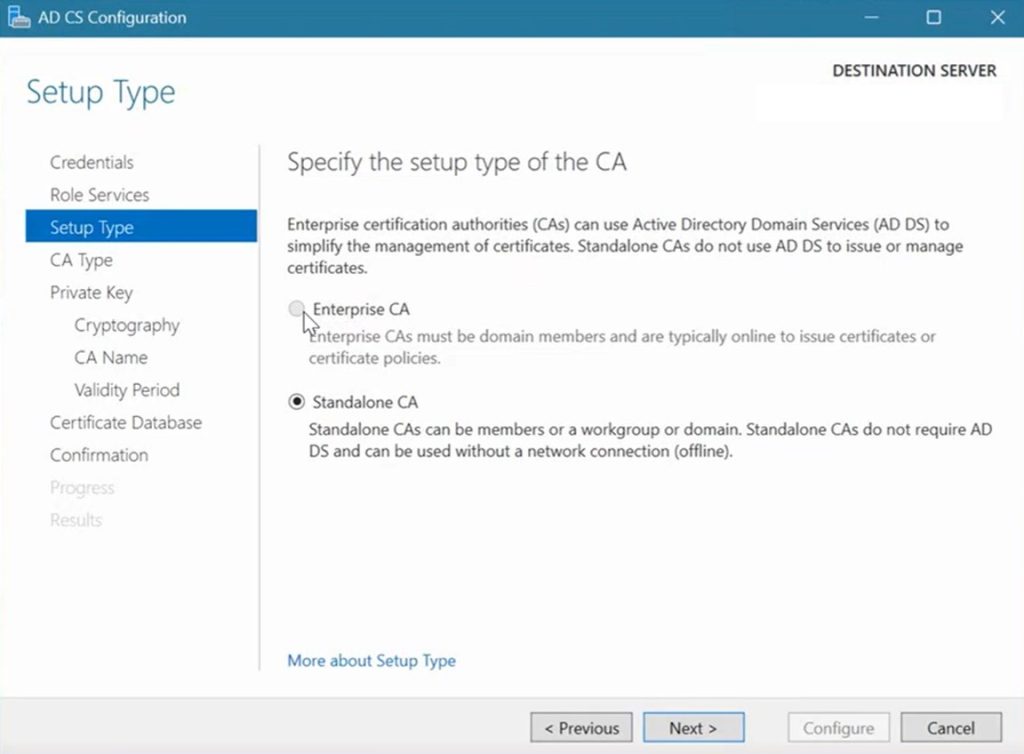
The root cause is that the credentials supplied to the ADCS configuration wizard do not have sufficient Active Directory permissions. The account must hold both Enterprise Admin and Domain Admin roles. Work through the steps below in order.
Step 1: Verify the Server Is Domain-Joined
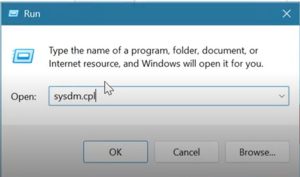
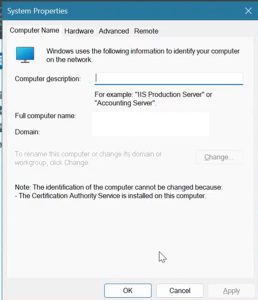
An Enterprise CA cannot be installed on a server that is not joined to the domain. Open the Run dialog (Win+R), type sysdm.cpl, and press Enter. The System Properties window shows the domain the server belongs to under the Computer Name tab. If it shows a workgroup rather than a domain name, join the server to the correct AD domain before proceeding.
Step 2: Check the Enterprise Admins Group in Active Directory
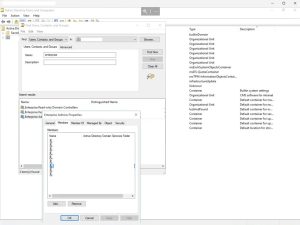
Open Active Directory Users and Computers. Navigate to the domain root, expand the Users container, and locate the Enterprise Admins group. Open the group and check the Members tab. If the account you intend to use for ADCS setup is not listed, it does not have sufficient permissions to deploy an Enterprise CA.

Step 3: Create a Dedicated Deployment Account
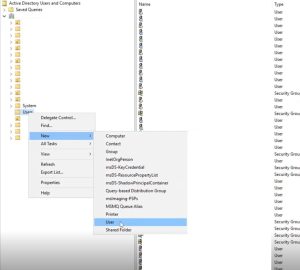
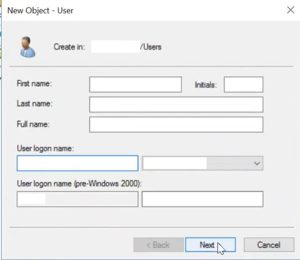
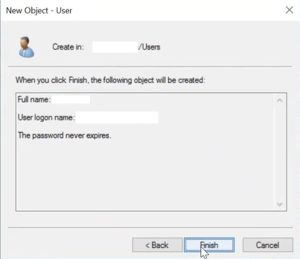
Rather than elevating a personal or existing production account, create a dedicated account specifically for this CA deployment. In Active Directory Users and Computers, right-click the Users container (or a dedicated service accounts OU), select New > User, and fill in the user details. Note the User Logon Name, as you will need it in the ADCS credentials step.
Step 4: Assign Enterprise Admin and Domain Admin Roles
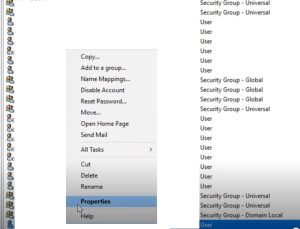
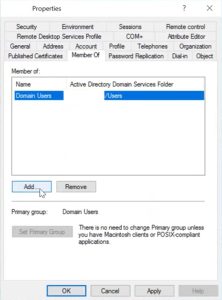
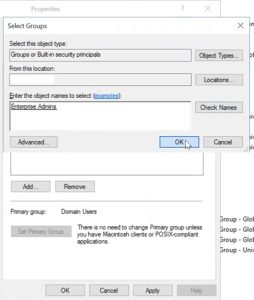
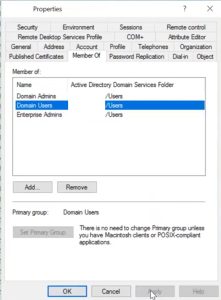
Right-click the newly created account and select Properties. Navigate to the Member Of tab and click Add. In the object picker, type Domain Admins and click Check Names to resolve it, then add Enterprise Admins the same way. Once both groups appear, click Apply to save the changes.
Step 5: Supply the New Credentials in the ADCS Wizard
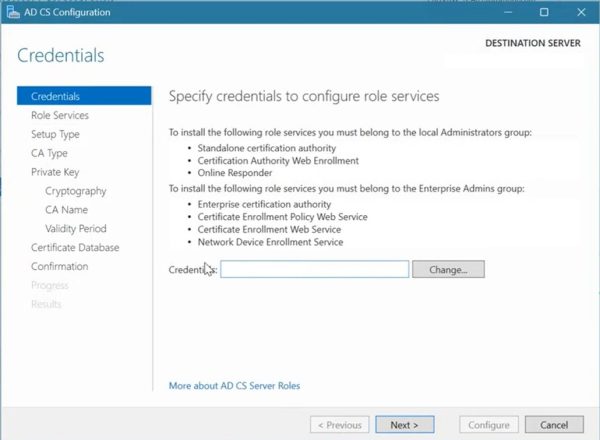
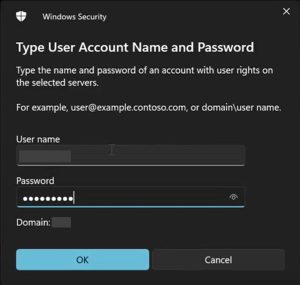
Return to the ADCS configuration wizard in Server Manager. On the Credentials page, click Change to replace the current account with the newly created deployment account. Enter the username (in DOMAIN\username format) and the password you set, then click OK. The wizard will validate the credentials against Active Directory.
Step 6: Confirm the Enterprise CA Option Is Now Available
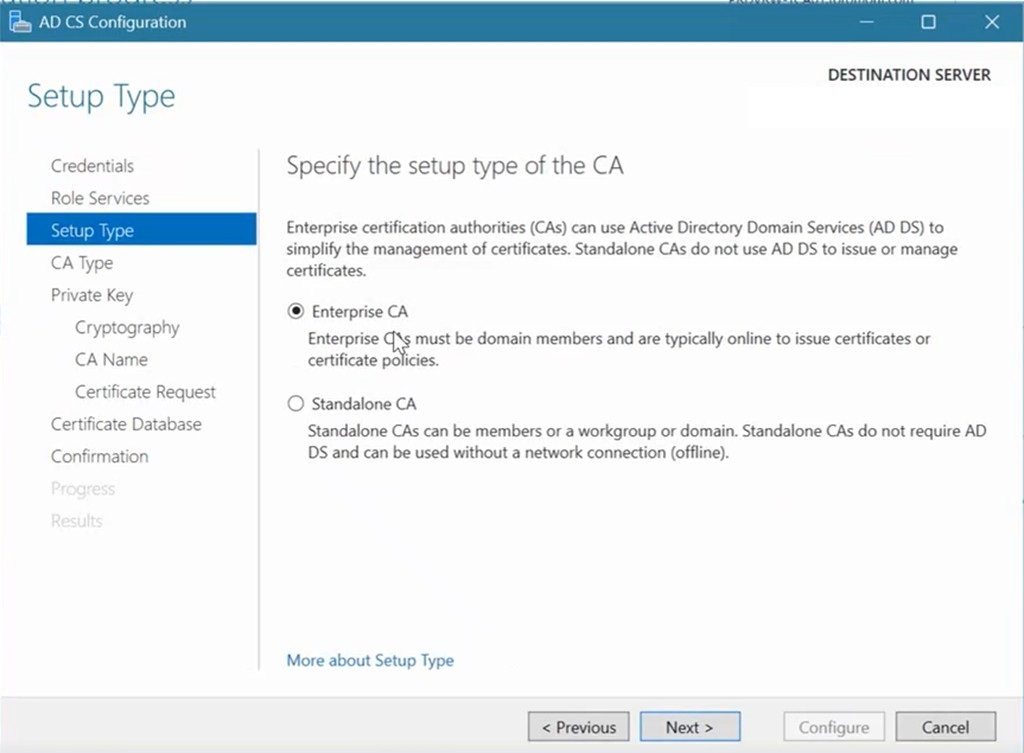
After supplying the correct credentials, navigate back to the CA Type selection page. The Enterprise CA option should now be selectable. Continue through the ADCS setup wizard to complete the configuration of your Issuing CA.
Common ADCS Setup Issues: Impact and Remediation Table
The grayed-out Enterprise CA button is one of several configuration errors that can block or destabilize an ADCS deployment. Use this table to triage the most frequent issues, understand their business impact, and assign clear ownership.
| Issue | Business Impact | Recommended Action | Owner |
|---|---|---|---|
| Enterprise CA button grayed out | CA deployment blocked; certificate issuance delayed | Create a dedicated account with Enterprise Admin and Domain Admin roles; supply it in the ADCS credentials page | PKI Admin + AD/Identity Team |
| Server not domain-joined | Enterprise CA option unavailable; CA cannot integrate with AD | Join the server to the correct AD domain before starting ADCS setup | Platform / Server Team |
| Elevated account not removed after setup | Persistent privileged account creates audit finding and attack surface | Remove Enterprise Admin and Domain Admin membership from deployment account immediately after CA is deployed | AD/Identity Team + Compliance |
| CRL distribution point unreachable | Certificate validation fails; services that check revocation go offline | Publish CRL to an HTTP endpoint accessible to all relying parties; test before issuing production certificates | PKI Admin + Network Team |
| No certificate lifecycle automation | Certificates expire silently; outages affect users and services | Deploy CertSecure Manager to automate discovery, renewal, and revocation | PKI Admin + Security Architect |
| Weak CA key size or algorithm | Non-compliance with NIST guidance; future migration cost increases | Use RSA 4096-bit for Root CA, RSA 3072-bit minimum for Issuing CA; plan for PQC migration | Security Architect + PKI Admin |
What to Do After the Enterprise CA Is Deployed
Fixing the grayed-out button is only the first step. A freshly deployed Enterprise CA needs to be hardened, monitored, and integrated with lifecycle automation before it is ready to support production workloads.
Remove Elevated Permissions Immediately
The deployment account should have Enterprise Admin and Domain Admin membership for only as long as the ADCS setup takes. Once the CA is configured and issuing test certificates successfully, remove those group memberships from the deployment account. Leaving them in place is a persistent audit finding and an unnecessary attack surface. Document the account name, its current (reduced) permissions, and where the credentials are stored.
Verify CRL and OCSP Publication
An Enterprise CA that cannot publish revocation information is not production-ready. Confirm that the Certificate Revocation List (CRL) distribution point is reachable over HTTP from all clients that will rely on certificates from this CA. If you are deploying OCSP, verify that the responder is returning valid, signed responses. Test revocation checking from a domain-joined workstation before issuing any production certificates.
Automate Certificate Lifecycle Management
A manually managed CA is a liability at scale. The CA/Browser Forum approved Ballot SC-081v3 in April 2025, setting a phased schedule that reduces public TLS certificate validity to 200 days (from March 15, 2026), 100 days (from March 15, 2027), and 47 days (from March 15, 2029). While internal CA certificates are not directly subject to CA/B Forum rules, the same automation discipline applies. CertSecure Manager integrates with ADCS to provide automated discovery, renewal, and revocation across the certificate fleet, so no certificate expires without warning.
Build a Cryptographic Inventory
Once the CA is issuing certificates, the next operational challenge is knowing what it has issued and where those certificates are deployed. CBOM Secure builds and maintains a full cryptographic bill of materials across the environment, giving PKI teams the visibility to track every issued certificate, identify weak algorithms, and prepare for future migration to post-quantum cryptography standards. NIST finalized FIPS 203 (ML-KEM), FIPS 204 (ML-DSA), and FIPS 205 (SLH-DSA) in August 2024 as the first post-quantum standards. Planning for that migration starts with knowing what you currently have.
Pre-Deployment Checklist: Enterprise CA Setup
Run through this checklist before starting the ADCS configuration wizard to avoid the most common setup failures:
- Server is domain-joined (verify via sysdm.cpl before opening Server Manager)
- A dedicated deployment account has been created (not a personal or production service account)
- Deployment account is a member of both Enterprise Admins and Domain Admins
- Deployment account credentials are stored securely and documented in the CA runbook
- CA key algorithm and size are defined: RSA 4096-bit for Root CA, RSA 3072-bit minimum for Issuing CA
- CA validity periods are set appropriately: Root CA 10-20 years, Issuing CA 5-10 years
- CRL distribution point URLs are defined and confirmed reachable over HTTP
- OCSP responder is planned or deployed and tested
- Post-setup task is documented: remove Enterprise Admin and Domain Admin from deployment account
- Certificate lifecycle management platform (CertSecure Manager) integration is planned
- Cryptographic inventory tool (CBOM Secure) is in scope for post-deployment discovery
- CA runbook and deployment record are filed for audit purposes
How Encryption Consulting Can Help
At Encryption Consulting, we work with organizations at every stage of PKI deployment, from architecture design through implementation, troubleshooting, and ongoing management. Whether you are deploying Microsoft ADCS, migrating to a PKI-as-a-Service platform, or building a hybrid CA environment, our team handles the configuration details so your team does not have to learn them through trial and error.
Our PKI Services cover CA hierarchy design, certificate policy and CPS development, ADCS deployment and hardening, revocation infrastructure, and integration with certificate lifecycle management platforms. For organizations planning ahead for post-quantum cryptography, our PQC Readiness assessment and the PQC Center of Excellence provide a structured path from today’s RSA and ECC infrastructure to NIST-standardized algorithms.
To discuss your PKI setup or troubleshoot an existing deployment, reach out to [email protected] or visit our PKI Services page.
Conclusion
A grayed-out Enterprise CA button is a frustrating but entirely fixable problem. The cause is always the same: insufficient Active Directory permissions on the account running the ADCS wizard. The fix is to supply credentials for an account with Enterprise Admin and Domain Admin roles, which ADCS requires to register the CA in the AD forest.
The broader lesson is that PKI setup errors are almost always permission or configuration issues that surface because the prerequisites were not verified before deployment began. A pre-deployment checklist, a dedicated deployment account, and a documented runbook eliminate most of them. Once the CA is running, integrating certificate lifecycle automation and building a cryptographic inventory turn a manually managed CA into a scalable, audit-ready trust infrastructure.
Frequently Asked Questions
What is the main takeaway from this post on the grayed-out Enterprise CA button?
The Enterprise CA option in ADCS is grayed out when the account running the setup lacks Enterprise Admin and Domain Admin permissions in Active Directory. The fix is to create or promote a user account with both roles, then re-run ADCS configuration using those credentials. The button becomes available immediately once the correct credentials are supplied.
Why does this matter for enterprise PKI teams?
Enterprise PKI teams deploy Issuing CAs on a defined schedule tied to business projects, compliance audits, or infrastructure refreshes. A grayed-out Enterprise CA button halts that deployment until the permissions issue is resolved, creating delays that cascade into certificate issuance timelines, project deadlines, and, in some cases, compliance gaps. Understanding the root cause in advance prevents these blockages.
What risks increase if this issue is handled without a documented process?
Without a documented remediation process, teams may grant excessive standing permissions to resolve the error quickly, leaving privileged accounts active long after the CA is deployed. They may also misconfigure Active Directory group memberships or add the wrong user to Enterprise Admins, creating audit findings. According to DigiCert’s Trust Pulse Survey (July 2, 2025), nearly half of enterprises experienced certificate-related downtime in the past year, often traced to avoidable configuration errors.
Which teams should own the resolution of this issue?
Resolution requires collaboration between three teams: the PKI or security team (who identifies the error and owns the CA deployment), the Active Directory or identity team (who grants Enterprise Admin and Domain Admin membership to the deployment account), and the server or platform team (who confirms the server is domain-joined). CISOs and compliance teams should ensure that any temporary privileged access granted is revoked promptly after deployment.
How does this connect to certificate lifecycle management?
A grayed-out Enterprise CA button means no Issuing CA can be deployed, which means no certificates can be issued to users, devices, or services that depend on that CA. Certificate lifecycle management platforms like CertSecure Manager depend on a functioning CA hierarchy to automate issuance, renewal, and revocation. Delays in CA deployment therefore delay the automation layer that prevents certificate expiry outages downstream.
How should organizations measure success after resolving this issue?
Success metrics include: Enterprise CA deployed and issuing certificates without error; deployment account privileges revoked or scoped down after setup; CA audit logs confirming successful first issuance; and zero unauthorized group membership changes in Active Directory. Longer-term, track time-to-deploy for future CAs using the documented process, and measure whether certificate issuance errors recur due to permission gaps.
What should be audited or monitored regularly after an Enterprise CA is deployed?
Audit quarterly: Active Directory group membership for Enterprise Admins and Domain Admins (flag any accounts added for CA deployment that were not subsequently removed), CA audit logs for unauthorized certificate issuance, and server domain-join status. Monitor continuously: CA service health, CRL publication schedules, and any failed enrollment attempts that may indicate a permissions regression.
How does this issue affect cloud, hybrid, or multi-CA PKI environments?
In hybrid PKI environments where an on-premises ADCS Issuing CA works alongside a cloud-based CA such as a PKIaaS platform, a deployment failure on the ADCS side can create gaps in certificate coverage for workloads that depend on that CA. Multi-CA environments also increase the risk that temporary privileged accounts created to resolve setup issues are forgotten across multiple deployment events.
What common mistakes should teams avoid when fixing the grayed-out Enterprise CA button?
The most common mistakes are: using a personal or existing production account with elevated permissions rather than creating a dedicated deployment account; not removing Enterprise Admin membership from the deployment account after setup is complete; failing to verify domain-join status before starting the ADCS wizard; and not documenting the account name, group memberships, and credential storage location for future reference or audits.
What should be refreshed quarterly in a PKI environment to prevent this issue recurring?
Refresh quarterly: Active Directory group membership reviews for Enterprise Admins and Domain Admins, CA deployment runbooks and documented procedures, server domain-join verification for all CA hosts, and privileged account inventories. Also review whether any future CA deployments are planned so that deployment accounts and permissions can be provisioned in advance rather than under deadline pressure, which is when configuration shortcuts tend to be taken.
- Quick Answer: Why Is the Enterprise CA Button Grayed Out?
- Key Takeaways
- What Is an Enterprise CA and Why Does It Require Domain Integration?
- Who Should Care About This Issue
- Fixing the Grayed-Out Enterprise CA Button: Step-by-Step
- Step 1: Verify the Server Is Domain-Joined
- Step 2: Check the Enterprise Admins Group in Active Directory
- Step 3: Create a Dedicated Deployment Account
- Step 4: Assign Enterprise Admin and Domain Admin Roles
- Step 5: Supply the New Credentials in the ADCS Wizard
- Step 6: Confirm the Enterprise CA Option Is Now Available
- Common ADCS Setup Issues: Impact and Remediation Table
- What to Do After the Enterprise CA Is Deployed
- Pre-Deployment Checklist: Enterprise CA Setup
- How Encryption Consulting Can Help
- Conclusion
- Frequently Asked Questions