- Introduction: PKI and CLM Modernization
- Who Should Care About PKI and CLM Modernization
- Challenges of Traditional Certificate Management
- PKI and CLM Modernization: Issue, Impact, and Remediation
- Modernization Steps for PKI and CLM
- Continuous Monitoring and Compliance
- How Encryption Consulting Can Help Modernise Your PKI and CLM
- Conclusion
- Frequently Asked Questions
PKI and CLM modernization means upgrading legacy certificate authorities and manual certificate tracking into automated, cloud-aligned systems that use ACME-based issuance, centralized policy enforcement, and continuous discovery. It replaces spreadsheet-driven certificate management with unified visibility and automation built for machine identity growth, shorter certificate lifespans, and post-quantum cryptography readiness.
Public Key Infrastructure (PKI) and Certificate Lifecycle Management (CLM) form the foundation of digital trust, enabling secure communication, strong authentication, and reliable data protection across modern enterprise environments.
As organisations shift toward cloud-native architectures, IoT ecosystems, and zero-trust security models, the scale and complexity of machine identities continue to grow exponentially. Machine identities, including AI agents, now outnumber human identities 109 to 1, up from 82 to 1 a year earlier, according to Palo Alto Networks’ 2026 Identity Security Landscape report, based on a survey of 2,930 cybersecurity decision-makers. Combined with emerging challenges such as TLS 1.2 deprecation, certificate sprawl across containers and microservices, and new mandates for post-quantum cryptography (PQC), traditional certificate management approaches have become increasingly inefficient and risky. PKI and CLM modernisation is now a critical component of broader machine identity management.
Introduction: PKI and CLM Modernization
PKI modernisation focuses on upgrading the core security framework that uses cryptographic keys and digital certificates to authenticate identities, establish trust, and secure communications and data exchanges across the enterprise. Modern environments demand more flexible, automated, and cloud-aligned PKI architectures, which extend far beyond the capabilities of legacy Certificate Authorities (CAs).
Today, PKI modernisation often includes adopting modern CA models such as cloud-hosted private CAs in Azure AD, ACME-based automated certificate issuance, and the use of short-lived certificates to reduce reliance on long-term secrets and improve security posture. Modern PKI also depends heavily on hardware-backed trust anchors, requiring secure root CA hosting, FIPS-compliant HSMs, tamper-resistant key storage, and resilient signing workflows to maintain cryptographic integrity.
To successfully modernise PKI, organisations should focus on several key aspects:
- Conducting a comprehensive discovery and inventory of all digital certificates in the enterprise to identify redundancies, inactive systems, and security gaps.
- Centralised governance and policy to ensure consistent certificate issuance, usage, and compliance monitoring across complex organisational structures.
- Automation of the certificate lifecycle including issuance, renewal, revocation, and key management to reduce manual errors and prevent service outages.
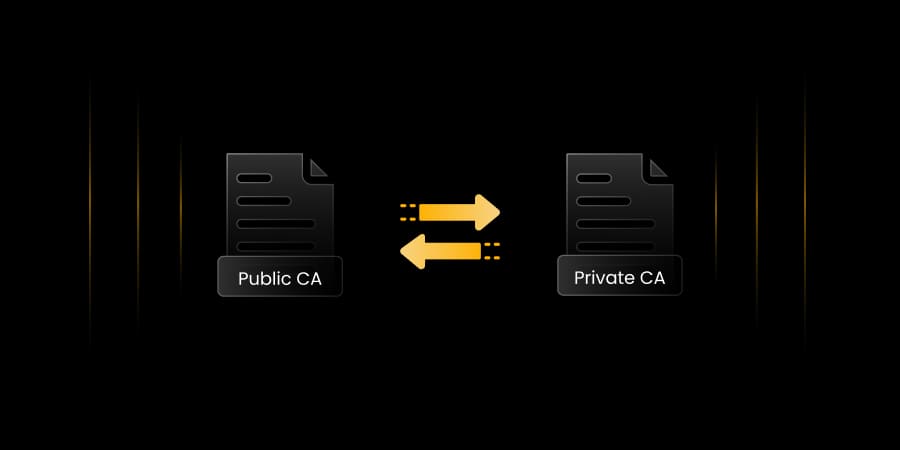
- Merging public and private PKI systems into unified platforms to simplify management, cut costs, and enhance security.
- Hardware security modules (HSMs) integration for secure key generation and storage, with cloud and hybrid support to increase scalability and availability.
- Crypto-agility and future-proofing, including preparing PKI systems for post-quantum cryptography (PQC) to defend against future quantum computing threats. NIST finalized FIPS 203 (ML-KEM), FIPS 204 (ML-DSA), and FIPS 205 (SLH-DSA) in August 2024 as the first post-quantum standards.
CLM modernisation goes hand in hand with PKI modernisation. As organisations scale into cloud, DevOps, and IoT ecosystems, the number of machine identities grows exponentially. Traditional certificate processes cannot keep pace, resulting in unmanaged certificates, service outages, and compliance gaps. Modern CLM creates a unified, automated, and policy-driven certificate management framework with full visibility and control across hybrid and multi-cloud environments. Modern CLM programs typically include:
- Automated discovery and real-time monitoring of certificates.
- Streamlined workflows for certificate provisioning, renewal, and revocation.
- Reducing risk by decommissioning unused or shadow certificates.
- Assigning ownership and accountability for certificates to appropriate teams.
- Enhancing compliance through consistent and auditable certificate policies.
Who Should Care About PKI and CLM Modernization
PKI and CLM modernization is not owned by a single team. Every role below has a direct stake in getting it right.
| Role | Why It Matters | Action Item |
|---|---|---|
| PKI Admins | Own CA hierarchy design, certificate issuance, and revocation workflows that must scale to machine identity volumes | Complete a full certificate inventory; automate renewal via ACME, SCEP, or EST; audit deprecated algorithms quarterly |
| Security Architects | Define cryptographic policy standards and the trust model governing all certificate issuance | Enforce NIST 800-131A algorithm floors; design CA hierarchies with PQC in mind; plan CBOM discovery before migration |
| Platform / DevOps Teams | Deploy and renew certificates in CI/CD pipelines, cloud workloads, and container environments at machine speed | Embed ACME-based automation into pipelines; prohibit hardcoded certificate configurations; enable short-lived cert issuance for Kubernetes |
| Compliance Teams | Must evidence certificate lifecycle controls for NIST 800-57, FIPS 140-3, PCI DSS, HIPAA, and GDPR audits | Build automated compliance reports from CLM inventory; include certificate algorithm review in quarterly audit scope |
| CISOs | Own the risk register entry for certificate outage risk and post-quantum cryptography exposure | Fund CLM automation and CBOM discovery tooling; require a current certificate inventory; include PKI modernization in board-level risk reporting |
Challenges of Traditional Certificate Management
Outdated certificate management practices introduce several operational, security, and compliance risks that hinder an organisation’s ability to support modern cloud-native and distributed environments. These challenges fall into five major categories:
1. Visibility Challenges
Traditional certificate management often lacks centralised visibility across distributed environments. Without a unified inventory, organisations struggle to track where certificates live, who owns them, when they expire, and how they are used. Only 34% of organizations have a complete and current view of their digital certificates, and 74% are very or extremely concerned about outages caused by certificate sprawl, according to DigiCert’s 2026 Global PKI Research Report, published June 2, 2026 (based on an Omdia survey of 423 senior IT and security decision-makers).
This lack of visibility becomes especially problematic in highly dynamic environments such as Kubernetes, where certificates rotate every 30-90 days, and in cloud-native systems where new workloads spin up and down rapidly. As a result, organisations face a growing risk of unmanaged, shadow, or rogue certificates leading to outages or exposure. CBOM Secure automates cryptographic discovery across hybrid and multi-cloud environments, closing the visibility gap.
2. Control Challenges
Legacy certificate management tools are not designed for modern architectures, resulting in limited control over certificate issuance, renewal policies, and governance. Distributed teams, fragmented CA usage, and inconsistent policies make it difficult to enforce standardised practices across cloud, IoT, DevOps, and on-prem environments. This lack of control leads to misconfigurations, policy violations, and operational inconsistencies that weaken the overall trust model.
3. Automation Challenges
Many enterprises still rely on manual certificate processes: emails, spreadsheets, ticketing queues, and ad hoc scripts. These manual workflows cannot keep up with today’s scale or speed, particularly in environments where Kubernetes and service meshes rotate certificates frequently, DevOps pipelines require rapid certificate provisioning, and cloud autoscaling can create and destroy workloads faster than manual issuance. The CA/Browser Forum’s Ballot SC-081v3 (April 2025) takes maximum public TLS certificate validity to 200 days (March 2026), 100 days (March 2027), and 47 days (March 2029), making manual renewal mathematically unsustainable at any meaningful certificate volume.
4. Security Challenges
Decentralised certificate management often results in insecure private key storage, inconsistent cryptographic controls, and gaps in certificate validation. Keys stored on local servers, shared directories, or unmanaged devices are vulnerable to theft or misuse, potentially enabling impersonation or unauthorised access. The absence of automated revocation workflows further increases the risk of compromised certificates persisting undetected.
5. Compliance Challenges
Mismanaged certificates frequently lead to expired or non-compliant configurations, causing service downtime, audit failures, or regulatory violations. Without automated policy enforcement and real-time compliance monitoring, organisations struggle to meet standards around encryption strength, certificate validity, CA trust, and lifecycle documentation. As environments grow more distributed, maintaining consistent compliance manually becomes nearly impossible.
Legacy PKI/CLM vs. Modernized PKI/CLM
The table below summarizes what changes across each of the five challenge categories above once an organization modernizes.
| Dimension | Legacy PKI/CLM | Modernized PKI/CLM |
|---|---|---|
| Certificate discovery | Manual spreadsheets, incomplete inventory | Continuous automated discovery across cloud, on-prem, and DevOps |
| Issuance | Manual requests, ad hoc approval | ACME-based, policy-checked automated issuance |
| Governance | Fragmented across teams and CAs | Centralized, policy-as-code governance |
| Key storage | Local servers, shared directories | FIPS-compliant HSMs, cloud key vaults |
| Compliance reporting | Reconstructed after the fact | Continuous, auditable, real-time |
| Crypto-agility / PQC readiness | Not assessed | Built into the modernization roadmap |
PKI and CLM Modernization: Issue, Impact, and Remediation
Use this checklist to prioritize modernization efforts. Items are ordered from foundational visibility through advanced post-quantum readiness.
| Issue | Business Impact | Recommended Action | Owner |
|---|---|---|---|
| No centralized certificate inventory | Shadow certificates expire unnoticed; audit evidence cannot be produced | Deploy automated discovery via CBOM Secure across all environments | PKI Admin + Security Architect |
| Manual certificate renewal | Certificate expiry outages; unsustainable at 47-day cadence by 2029 | Implement ACME-based automation in CertSecure Manager | PKI Admin + Platform Team |
| Fragmented CA governance | Inconsistent algorithm policy; rogue certificates from unapproved CAs | Consolidate to a unified CLM platform with policy-as-code enforcement | Security Architect + CISO |
| Private keys in software keystores | Key theft enables impersonation; FIPS 140-3 non-compliance | Migrate to HSM-backed key storage; use HSM-as-a-Service for cloud workloads | Security Architect + PKI Admin |
| Deprecated algorithms in production (RSA-1024, SHA-1) | NIST 800-131A non-compliance; audit findings; quantum vulnerability | Run cryptographic inventory via CBOM Secure; enforce algorithm policy via CLM | Compliance + PKI Admin |
| No PQC migration plan | Exposure to harvest-now-decrypt-later attacks; future algorithm migration crisis | Begin PQC Readiness assessment; use PQC Center of Excellence for NIST FIPS 203/204/205 planning | CISO + Security Architect |
| PKI not integrated with DevOps/CI-CD | Developers use self-signed certs or hardcoded secrets; security blind spots in pipelines | Embed ACME and REST API certificate issuance into deployment pipelines | Platform/DevOps Team + PKI Admin |
| No compliance audit trail for certificates | Audit failures under PCI DSS, HIPAA, GDPR, NIST CSF | Enable automated audit logging and compliance reporting in CertSecure Manager | Compliance Team |
Modernization Steps for PKI and CLM
The modernisation of PKI and CLM follows a series of steps to improve security, efficiency, governance, and automation across digital certificates and key management processes. The investment holds up under scrutiny: 80% of organizations are implementing or planning PKI modernization initiatives, and among those that have modernized, 64% report improved certificate lifecycle automation and 60% report fewer outages, per DigiCert’s 2026 Global PKI Research Report cited above.
Enterprise PKI Services. Get complete end-to-end consultation support for all your PKI requirements! Learn More
PKI Modernisation Steps
PKI modernisation follows a structured progression that strengthens governance, enhances automation, increases security, and prepares organisations for future cryptographic and operational demands.
Step 1: Discovery and Assessment
Begin by identifying and building a complete inventory of all PKI-related components, including CAs, issued certificates, key usage patterns, trust chains, signing workflows, and dependencies across the enterprise. A modern assessment should also evaluate crypto-agility and PQC readiness, ACME protocol compatibility, policy-as-code capabilities, and logging and SIEM integration readiness for tools such as Splunk, Azure Sentinel, or Elastic. This baseline assessment highlights security gaps, compliance risks, technical debt, and operational inefficiencies.
Step 2: Prioritise Use Cases
Identify and prioritise applications, services, and business processes that rely on PKI, including SSL/TLS, device authentication, workload identities, secure email, code signing, and document signing. Critical and high-risk use cases such as externally facing TLS endpoints, authentication services, and identity providers should be modernised first to maximise security gains and reduce operational exposure.
Step 3: Centralise Governance and Policy Management
Establish centralised governance for certificate issuance, renewal, revocation, and key management. This includes defining consistent policies for certificate validity periods, allowed CAs, cryptographic standards, approval workflows, and identity validation rules. Modern PKI governance increasingly uses policy-as-code, enabling automation, versioning, and enforcement across cloud-native and DevOps environments.
Step 4: Consolidate Public and Private PKI
Merge and standardise certificate operations across public and private PKI infrastructures. Modern consolidation includes orchestration of private CAs such as Microsoft ADCS, AWS PCA, and Azure AD Private CA alongside public CAs through a unified CLM platform. This enables consistent policy enforcement, reduces operational overhead, and improves scalability across hybrid and multi-cloud environments. PKI-as-a-Service accelerates this consolidation for organizations without deep in-house PKI expertise.
Step 5: Strengthen Security Controls
Enhance PKI security through strong authentication (MFA, privileged access controls) for administrators; secure key storage using FIPS-compliant HSMs or cloud HSMs; root and subordinate CA hardening; role-based access control and delegated administration; and adoption of approved and quantum-resistant cryptographic algorithms. Integrations with Azure Key Vault, AWS CloudHSM, and Google Cloud KMS support secure key workflows in cloud-native ecosystems.
Step 6: Automate Certificate Management
Introduce automation for certificate issuance, renewal, deployment, validation, and revocation. Modern automation must support DevOps pipelines (CI/CD, GitOps), cloud platforms (AWS, Azure, GCP), ACME-based issuance for Kubernetes clusters, service meshes, and load balancers, and dynamic autoscaling environments where certificates must be provisioned instantly. CertSecure Manager provides this automation with native ACME support, REST API integrations, and CI/CD pipeline connectors.
Step 7: Monitor and Optimise PKI Operations
Implement continuous monitoring of PKI usage, certificate metrics, signing operations, and compliance posture. Modern PKI monitoring includes SIEM and SOAR integration for alerting and incident response, analytics to detect anomalies in certificate usage patterns, and monitoring integrations with AWS PCA, Azure Key Vault, ACME services, and cloud PKI logs.
Certificate Lifecycle Management (CLM) Modernisation Steps
Step 1: Certificate Discovery and Inventory
Automatically scan and build a complete, real-time inventory of all digital certificates deployed across networks, servers, devices, cloud workloads, and applications. Modern discovery must account for short-lived certificates in Kubernetes and service meshes, ACME-based renewal workflows, integration with DevOps and IaC ecosystems including CI/CD pipelines, Terraform, Ansible, and Kubernetes cert-manager, and granular auditable logging aligned with FIPS, NIST 800-57, and NIST 800-63.
Step 2: Issuance and Renewal Automation
Implement automated workflows for certificate issuance, renewal, and rotation with embedded policy checks for identity validation, certificate type approval, and governance alignment. Modern automation must support ACME-based workflows, short-lived certificate issuance, automated expiry monitoring with proactive renewal, seamless key rotation during renewal, and integration with CI/CD pipelines, Terraform, and Ansible.
Step 3: Certificate Deployment and Configuration
Automate secure deployment of certificates to the right servers, devices, or applications, including installing intermediate certificates and setting trust chains correctly. Proper deployment prevents outages and security gaps.
Step 4: Certificate Renewal and Rotation
Automate certificate expiry monitoring and renewal before validity lapses. Support key rotation during renewal to enhance security. This avoids downtime and mitigates risks from expired or weak certificates.
Step 5: Certificate Revocation Management
Automate certificate revocation to quickly retire compromised, expired, or unused certificates and notify relying parties to prevent misuse. This is critical to maintaining trust and security integrity.
Step 6: Certificate Retirement and Archiving
Securely retire and archive certificates once they are no longer active. Archived certificates should be retained for auditing and compliance purposes while minimising risk exposure.
Step 7: Continuous Monitoring and Compliance
Implement continuous health monitoring for certificates to track expiration, revocation status, and compliance with organisational policies and regulations. Integrate reporting and alerting to maintain certificate hygiene and prevent outages.
Step 8: Automation and Integration
Integrate CLM with broader IT and security infrastructure such as IAM, network devices, and cloud systems, and use extensive automation for lifecycle events to reduce overhead and human error.
Continuous Monitoring and Compliance
Continuous monitoring and compliance in PKI and CLM is a crucial ongoing process, safeguarding the health, security, and regulatory adherence of all digital certificates and PKI components in an enterprise environment.
Continuous Monitoring
Continuous monitoring includes automated surveillance of all certificates and PKI-related assets across the entire technology estate, tracking certificate issuance, expiration dates, revocation status, key usages, and compliance with organisational security policies.
- Expiration Tracking: Early alerts warn administrators before certificates expire, ensuring timely renewal and preventing service disruptions.
- Revocation Status: Monitoring ensures that compromised certificates are recognised by all relying systems to prevent unauthorised access or man-in-the-middle attacks.
- Usage and Anomaly Detection: Continuous analysis of certificate usage patterns identifies unexpected certificates, unapproved usage, or unusual key parameters that signal security threats or policy violations.
- Compliance Checks: Continuous verification against industry and organisational standards covering key length, algorithm strength, certificate transparency, and lifecycle policies.
Modern environments also require compliance monitoring for MQTT-based IoT device certificates. Effective compliance programs should support both agent-based and agentless scanning. Integrating certificate compliance data into SIEM and SOAR platforms such as Splunk and Microsoft Sentinel enables real-time alerting, automated response workflows, and improved audit readiness.
Compliance
Compliance ensures that all PKI and certificate lifecycle activities satisfy relevant legal, regulatory, and corporate security requirements through regular checks, reporting, and audit trails.
Policy Enforcement: Automated policy enforcement ensures every certificate issued or renewed aligns with predefined security standards. Modern CLM systems detect and block common policy violations such as RSA keys smaller than 2048 bits, deprecated algorithms like SHA-1, certificates with excessively long validity periods, and missing Subject Alternative Names (SAN) that cause TLS handshake failures.
- Reporting and Auditing: Comprehensive, real-time reports provide visibility into certificate status, compliance metrics, and incidents. Auditable logs of all certificate lifecycle events support internal and external compliance audits.
- Regulatory Adherence: Compliance with GDPR, HIPAA, PCI-DSS, and industry best practices through consistently applied certificate management controls.
- Risk Mitigation: Organisations minimise risk exposure from expired, misconfigured, or unauthorised certificates by maintaining compliance continuously.
How Encryption Consulting Can Help Modernise Your PKI and CLM
Modernising PKI and CLM is not just a technical upgrade, it is a strategic transformation that strengthens your organisation’s digital trust, security posture, and operational resilience. Encryption Consulting helps enterprises achieve this through end-to-end advisory, robust managed services, and proven automation platforms.
Modernize Certificate Lifecycle Management With CertSecure Manager
Our CertSecure Manager is a fully automated, enterprise-grade CLM solution that eliminates the challenges of manual certificate management. With CertSecure Manager, organisations gain complete certificate discovery across on-prem, cloud, DevOps, and hybrid environments; end-to-end automation for issuance, renewal, deployment, and revocation; centralised governance and policy control; role-based access and delegated ownership; seamless integrations with cloud platforms, ITSM tools, DevOps workflows, HSMs, and private/public CAs; native ACME protocol support for Kubernetes, service meshes, and short-lived certificate workflows; REST API integrations and DevOps pipeline support for CI/CD tools, Terraform, Ansible, and GitOps-based automation; and real-time monitoring and alerting to prevent outages and maintain compliance.
As of the CertSecure Manager 3.3 release, that automation extends further: zero-touch certificate renewal across supported web server agents, expanded support for 11 Certificate Authorities including Google Public CA and AWS, and AWS Cloud, IIS CCS Store, container, and vault discovery to close inventory blind spots. A built-in Certificate Risk Profile scores every certificate for weak keys, weak signature algorithms, and validity-period risk, and CertSecure Manager is now available directly in the ServiceNow Store.
Transform Your PKI with PKI-as-a-Service (PKIaaS)
Our PKI-as-a-Service offering enables organisations to modernise their PKI without the complexity of building, maintaining, and securing it internally. With PKIaaS, enterprises benefit from a fully managed, highly available PKI infrastructure with built-in redundancy; secure key generation and storage using FIPS-compliant HSMs; scalable architecture that supports cloud workloads, IoT, microservices, and hybrid environments; standardised and automated certificate policies; crypto-agility and readiness for post-quantum cryptography; and regular monitoring, audits, and maintenance performed by PKI experts.
For organizations that need visibility into their full cryptographic estate before, during, and after modernization, CBOM Secure builds and maintains a Cryptographic Bill of Materials across all environments. For post-quantum migration planning, start with the PQC Readiness assessment and the PQC Center of Excellence.
Conclusion
Modernising PKI and CLM is essential for strengthening digital trust and keeping up with the growing complexity and demands of modern security environments. By adopting automation, centralised governance, and modern security controls, organisations can reduce risk, prevent outages, and ensure long-term resilience.
Looking ahead, emerging mandates such as NSA’s CNSA 2.0 requirements, the phased PQC migration guidance from NIST, and the CA/Browser Forum’s 47-day TLS certificate validity timeline make crypto-agile, future-ready PKI infrastructure a business requirement, not a future consideration.
A modernised PKI and CLM foundation not only enhances security and compliance today but also positions organisations to meet these future cryptographic and regulatory obligations, supporting scalable, agile growth across the enterprise.
Frequently Asked Questions
What is the main takeaway from Preparing Your PKI and CLM for the Future?
PKI and CLM modernization replaces manual, fragmented certificate management with automated, cloud-aligned systems using ACME-based issuance, centralized policy enforcement, and continuous discovery. Organizations that modernize see measurable reductions in certificate-related outages and gain the crypto-agility needed for post-quantum cryptography migration.
Why does PKI and CLM modernization matter for enterprise PKI teams?
Enterprise PKI teams face machine identity volumes that grow 109 to 1 over human identities, certificate rotation cycles as short as 30-90 days in Kubernetes, and the CA/Browser Forum’s 47-day TLS certificate validity mandate arriving by March 2029. Legacy PKI processes cannot scale to this cadence. Modernization gives PKI teams the automation, visibility, and policy enforcement needed to operate at machine speed without increasing headcount.
What risks increase if PKI and CLM are handled manually?
Manual PKI and CLM dramatically increases the risk of certificate expiry outages, shadow certificates accumulating outside central visibility, weak algorithm configurations persisting undetected, and audit failures when teams cannot produce complete certificate lifecycle evidence. According to DigiCert’s Trust Pulse Survey (July 2, 2025), nearly half of enterprises experienced certificate-related downtime in the past year. Only 34% have a complete view of their certificates.
Which teams should own PKI and CLM modernization?
PKI admins own CA hierarchy design and certificate lifecycle automation. Security architects define cryptographic policy and algorithm standards. Platform and DevOps teams embed certificate automation into CI/CD pipelines and cloud workloads. Compliance teams audit certificate evidence against NIST 800-57, FIPS 140-3, PCI DSS, and HIPAA. CISOs own the risk posture and fund the CLM and CBOM tooling required. All five roles must collaborate for a successful modernization.
How does PKI modernization connect to certificate lifecycle management?
PKI modernization upgrades the trust infrastructure: CAs, HSMs, signing workflows, and governance. CLM modernization upgrades the operational layer: discovery, issuance, renewal, revocation, and monitoring. A modern CA hierarchy without automated CLM still produces expired certificate outages. A CLM platform without a modern CA hierarchy cannot enforce consistent policy across all issuance points. The two must be pursued together.
How should organizations measure success in PKI and CLM modernization?
Key metrics include: percentage of certificates under automated lifecycle management; number of certificate-related outages per quarter; percentage of the certificate estate with compliant algorithms with no RSA-1024 or SHA-1; audit pass rate for certificate lifecycle controls; and mean time to renew a certificate after an algorithm policy change. DigiCert’s 2026 research found that 64% of modernized organizations report improved automation and 60% report fewer outages.
What should be audited or monitored regularly in a modern PKI and CLM program?
Audit quarterly: algorithm compliance across the full certificate inventory; CA trust store currency; certificate-to-identity binding accuracy; and privileged access to CA systems. Monitor continuously: certificate expiry timelines, CRL and OCSP health, failed enrollment attempts, and certificates issued from unexpected CAs. Use CBOM Secure to maintain a full cryptographic bill of materials across hybrid and multi-cloud environments.
How does PKI and CLM modernization affect cloud, hybrid, or multi-CA PKI environments?
In hybrid and multi-CA environments, inconsistent policies across different CAs create certificate governance gaps. Modernization addresses this by deploying a unified CLM platform across internal ADCS, cloud CAs such as AWS PCA and Azure AD, and public CAs. PKI-as-a-Service is particularly effective for organizations that need to normalize policy enforcement across a fragmented CA estate without rebuilding their entire PKI infrastructure.
What common mistakes should teams avoid when modernizing PKI and CLM?
The most common mistakes are: starting automation before completing a full certificate inventory; modernizing the CLM platform without upgrading the underlying CA hierarchy to support ACME and short-lived certificates; treating crypto-agility as a future project rather than a design requirement; not assigning named owners to certificates during the inventory phase; and running parallel manual processes alongside the new automated system during transition.
What should be refreshed quarterly in a PKI and CLM modernization program?
Refresh quarterly: certificate inventory for completeness and accuracy; algorithm compliance against current NIST guidance; CA trust store currency across all environments; CLM policy rules to reflect any new compliance framework requirements; and cryptographic algorithm inventory via CBOM Secure to flag any pre-quantum algorithms still in production. Review PQC migration progress against NIST FIPS 203, 204, and 205 timelines every six months via the PQC Center of Excellence.
- Introduction: PKI and CLM Modernization
- Who Should Care About PKI and CLM Modernization
- Challenges of Traditional Certificate Management
- PKI and CLM Modernization: Issue, Impact, and Remediation
- Modernization Steps for PKI and CLM
- PKI Modernisation Steps
- Certificate Lifecycle Management (CLM) Modernisation Steps
- Step 1: Certificate Discovery and Inventory
- Step 2: Issuance and Renewal Automation
- Step 3: Certificate Deployment and Configuration
- Step 4: Certificate Renewal and Rotation
- Step 5: Certificate Revocation Management
- Step 6: Certificate Retirement and Archiving
- Step 7: Continuous Monitoring and Compliance
- Step 8: Automation and Integration
- Continuous Monitoring and Compliance
- How Encryption Consulting Can Help Modernise Your PKI and CLM
- Conclusion
- Frequently Asked Questions