Introduction to Envelope Encryption
If you work in security or cloud infrastructure, you have likely come across the term envelope encryption. It shows up in compliance reviews, architecture discussions, and cloud migration planning. But what does it actually mean, and why does it matter?
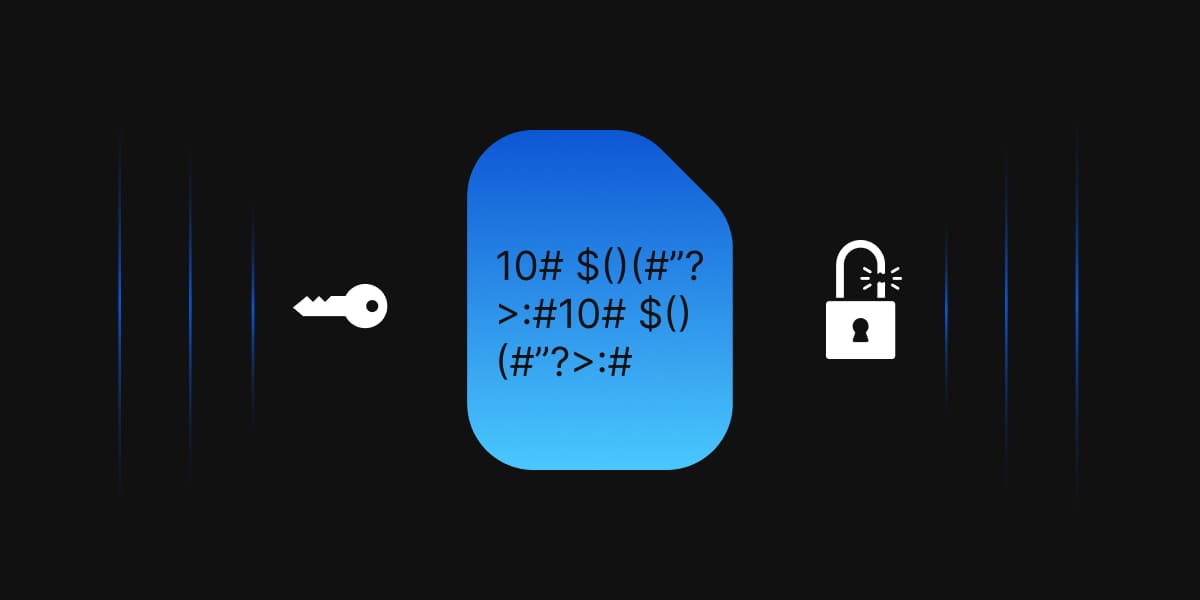
Envelope encryption is a way of protecting data using two separate layers of keys. Instead of using one key to encrypt everything, you use a Data Encryption Key (DEK) to encrypt the actual data and a Key Encryption Key (KEK) to protect the DEK itself. Think of it as a locked box inside a safe. Even if someone gets to the box, they still need the safe’s combination to open it.
This approach is used in almost every serious key management system today, including AWS Key Management Service (KMS), Google Cloud KMS, and enterprise Hardware Security Module (HSM) setups. Understanding how it works is one of the most practical things you can learn about data security.
Understanding Data Encryption Keys (DEKs)
The Data Encryption Key, or DEK, is the key that directly encrypts your data. It could be a database record, a file, a storage object, or a message in an application. DEKs use symmetric encryption algorithms like AES-256, which is one of the strongest standards available today.
One of the most important things about DEKs is that they should be unique and short-lived. Rather than using one DEK for all your data, a good system generates a new DEK for each object or session. This matters because if one DEK is ever compromised, only the data tied to that specific key is at risk. Everything else stays protected.
DEKs are always generated close to the data they protect, often in memory. They are never stored in plaintext. A DEK left in plain sight next to the data it encrypts offers no real protection at all. This is exactly the problem that the KEK solves.
Understanding Key Encryption Keys (KEKs)
The Key Encryption Key, or KEK, does not encrypt your data. Its only job is to encrypt and protect the DEK. This separation is intentional and important. It means that even if someone gains access to your application layer, they still cannot read your data without separately accessing the KEK.
KEKs are managed by dedicated systems, not by the application itself. In cloud environments, this is usually a managed service like AWS KMS, Azure Key Vault, or Google Cloud KMS. In on-premises deployments, a Hardware Security Module (HSM) is commonly used. An HSM is a physical device built specifically to store and manage cryptographic keys securely, without ever exposing them in plaintext.
Access to a KEK must be tightly controlled. Only specific, authorized systems or people should ever interact with it, and every single interaction needs to be logged. These audit logs are essential for compliance with regulations like PCI DSS and HIPAA, and they are equally valuable if you ever need to investigate a security incident.
In more advanced setups, you can introduce a cryptographic key hierarchy with a master key that protects the KEK, which in turn protects the DEKs. This layered approach gives organizations greater control and aligns well with compliance frameworks like FIPS 140-2 and NIST SP 800-57.
Key Wrapping Explained: How KEKs Protect DEKs
Key wrapping is the process by which a KEK encrypts a DEK. The result is a wrapped key, sometimes called an encrypted key. The wrapped DEK can be stored safely because it is useless without the KEK to unwrap it.
The standard method for key wrapping is AES Key Wrap, defined in RFC 3394. It is designed specifically for protecting cryptographic key material. It includes built-in integrity checking, which means that if anyone tampers with a wrapped key, that tampering can be detected before the key is used.
Here is how the full process works in practice. The application generates a DEK using AES-256 to encrypt a piece of data. That DEK is then sent to a KMS or HSM, which wraps it using the KEK. The wrapped DEK is stored alongside the encrypted data. When the data needs to be accessed later, the wrapped DEK is sent back to the KMS or HSM to be unwrapped. The plaintext DEK is used briefly to decrypt the data and is then immediately removed from memory.
The KEK never leaves the KMS or HSM at any point in this process, and the plaintext DEK is never written to disk. In cloud environments, AWS KMS handles this automatically through the GenerateDataKey API call, returning both a plaintext DEK for immediate use and a wrapped version for storage. This is envelope encryption done well.
KEK vs. DEK: Key Differences and Roles
Both KEKs and DEKs are symmetric keys, often using the same AES algorithm. What separates them is purpose and how they are managed. A DEK encrypts business data and is generated often, sometimes once per file or session. It is short-lived and stored in wrapped form alongside the data it protects. The application layer handles DEKs, supported by the KMS.
A KEK, on the other hand, only ever encrypts other keys. It is generated rarely, lives inside a secure system like an HSM or KMS and is never exposed in plaintext outside that system. Access to a KEK is strictly controlled and fully audited. While DEKs are rotated frequently, KEK rotation follows a policy-driven schedule and is treated as a significant operational event.
The principle behind this separation is called defence in depth. By splitting the responsibility of protecting data and protecting keys into two independent layers, you make it much harder for an attacker to succeed. Compromising the application gives access to wrapped DEKs that cannot be used. Stealing wrapped DEKs without the KEK yields nothing but encrypted data. Both layers must be breached simultaneously, which is a much harder problem.
How Encryption Consulting Can Help
Envelope encryption is only as strong as the system protecting your KEKs. If your Key Encryption Keys are not stored inside a dedicated, tamper-resistant environment, the entire two-layer architecture loses its security guarantee. That is where Encryption Consulting’s HSM Services come in.
Our HSM Services work across leading HSM platforms including Thales, nCipher, and Utimaco, and we design implementations that align with FIPS 140-3 and PCI DSS requirements. Whether you are deploying HSMs on-premises, integrating them with a cloud KMS, or building out a key hierarchy that covers DEKs, KEKs, and master keys, our team handles the architecture, implementation, and operational setup.
Here is where our HSM Services directly address your key management needs:
- KEK Protection: We design and implement HSM environments where Key Encryption Keys are generated, stored, and used entirely within the hardware boundary. The plaintext KEK never leaves the HSM, which is the standard that FIPS 140-3 enforces.
- Key Wrapping Implementation: We implement AES Key Wrap and related key protection standards within your HSM environment, ensuring that wrapped DEKs are properly protected and that integrity checking is built into every key operation.
- Cloud KMS and HSM Integration: For organizations running workloads on AWS, Azure, or Google Cloud, we integrate HSM-backed key management with cloud KMS services, giving you a robust envelope encryption architecture while maintaining control over your KEKs.
- Audit Logging and Compliance Alignment: Every interaction with a KEK inside an HSM needs to be logged. We configure comprehensive audit trails across your HSM environment, supporting compliance requirements under PCI DSS, HIPAA, and FIPS 140-3.
- Key Rotation and Lifecycle Management: We establish the operational processes for DEK and KEK rotation, including the policy-driven schedules and procedures that treat KEK rotation as the significant operational event it is.
If your organization is building or modernizing an envelope encryption architecture and needs confidence that your key management layer is properly secured, our HSM Services team is ready to help.
Conclusion
Envelope encryption is one of the most practical and widely used security patterns in modern systems. Once you understand how DEKs, KEKs, and key wrapping work together, you begin to see it everywhere, and with good reason. It solves the real-world challenge of protecting sensitive data at scale without creating unmanageable complexity around key storage.
By keeping data encryption and key protection as separate concerns, tied together through key wrapping and managed through a proper KMS or HSM, organizations can build cryptographic systems that are both strong and auditable. Layer in consistent key rotation and complete audit logging, and you have the foundation for enterprise-grade Encryption Key Management.