

- Quick Answer: When Does CipherTrust Manager Require External Support?
- 10 Reasons to Seek CipherTrust Manager Support
- Key Lifecycle and Rotation in CipherTrust Manager
- Access Policy and Audit Evidence Requirements
- Incident Response for CipherTrust Manager Key Compromise
- How Encryption Consulting Can Help
- Why Choose Our Support Services?
- Conclusion
- Frequently Asked Questions
CipherTrust Manager is a powerful key management and policy enforcement platform, but managing it effectively requires deep expertise, ongoing maintenance, and strategic oversight. Without proper support, organizations risk security gaps from misconfiguration, operational disruptions from unplanned downtime, and compliance failures from inadequate audit evidence. Key management adoption rates have surged as compliance requirements increase, making the operational burden of platforms like CipherTrust Manager a more common challenge. The recommended action: assess which of the 10 operational areas below represent the highest risk for your deployment, and engage specialized support to close those gaps before they become incidents.
Quick Answer: When Does CipherTrust Manager Require External Support?
External CipherTrust Manager support has the highest value when: the internal team is managing the platform as a secondary responsibility alongside other security work; the deployment is encountering performance, integration, or compliance issues that the team cannot diagnose; there is no tested backup and disaster recovery procedure; the platform has not been updated with security patches on the vendor’s release schedule; or the organization is expanding the deployment to new applications, cloud environments, or regions. All 10 reasons below correspond to specific failure modes that external expertise consistently prevents. For CipherTrust Manager technical guidance, see our posts on CipherTrust Manager Clustering Error and Everything You Need to Know About CipherTrust Manager.
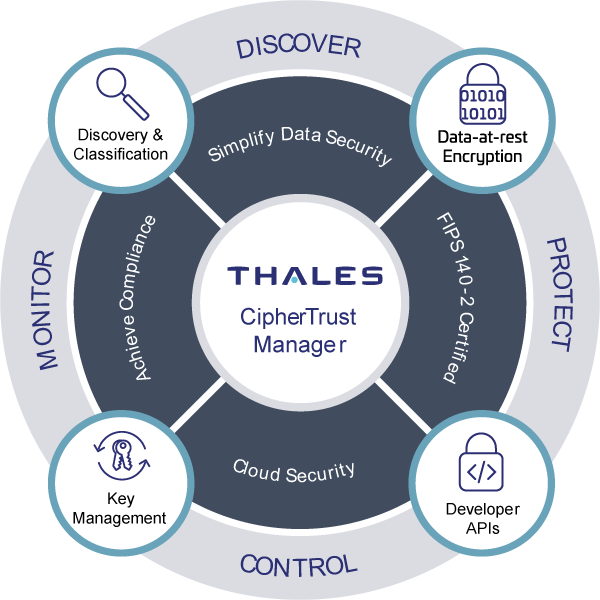
10 Reasons to Seek CipherTrust Manager Support
1. Complex Setup and Configuration
Deploying CipherTrust Manager requires precise configuration across multiple layers: network settings, TLS certificates, NTP synchronization, initial SSH key replacement for physical appliances, ABAC policy design, HA cluster configuration, and application-specific integration for each KMIP-connected system. Incorrect setup in any of these areas produces vulnerabilities, integration failures, or performance problems that are difficult to diagnose after the fact. A well-configured deployment ensures correct, efficient key management from the start rather than requiring remediation of production issues.
2. Integration with Existing Systems
CipherTrust Manager integrates with diverse applications, cloud environments, and hardware security modules (HSMs) via PKCS#11, KMIP, JCE, and .NET interfaces. Compatibility issues at any integration point create operational inefficiencies and security gaps: an application that fails to integrate correctly may fall back to software-based key storage without the team realizing the hardware protection layer has been bypassed. Proper support ensures each integration is configured correctly and verified before going to production. Key management adoption rates have grown significantly as more organizations recognize the compliance and security value of centralized platforms.
3. Continuous Maintenance and Updates
Security vulnerabilities are discovered in key management platforms just as in any enterprise software. CipherTrust Manager must be patched on the vendor’s release schedule to maintain protection against emerging threats. Regular updates, patches, and performance optimizations are necessary but require planning: each update must be tested against integrations before production deployment, and major version upgrades require migration planning. Dedicated support ensures the system is always current with the latest security enhancements without introducing disruption.
4. Compliance and Regulatory Challenges
Frameworks including GDPR, PCI DSS v4.0, NIS2, and the Cyber Resilience Act require specific key management controls and audit evidence. PCI DSS Requirement 3.7 mandates split knowledge, dual control, key rotation, encrypted storage, and documentation. Meeting these requirements through CipherTrust Manager demands expertise in both the platform configuration and the regulatory requirements. Non-compliance leads to fines, reputational damage, and loss of customer trust. Dedicated support helps implement best practices, prepare audit evidence, and maintain compliance as requirements evolve.
5. Disaster Recovery and Business Continuity
In the event of a cyberattack or system failure, regaining access to encrypted data depends on the availability of the key management infrastructure. A well-prepared disaster recovery plan for CipherTrust Manager includes high availability clustering, tested backup and restoration procedures, failover and failback procedures, and regular DR exercises. Without tested procedures, an organization may discover during an actual incident that the backup is invalid or the restoration procedure does not work as expected. Expert support designs, documents, and regularly tests the DR plan before incidents require it.
6. Proactive Threat Detection and Risk Mitigation
Threats including unauthorized key access, ABAC misconfigurations, and security misconfigurations can compromise sensitive data without triggering obvious alerts. According to the Global Encryption Trends Report of 2025 by Encryption Consulting, the average cost of a data breach in 2024 was $4.9 million. Without active monitoring and risk assessments, vulnerabilities go unnoticed. Proactive support provides continuous monitoring, swift threat detection, and immediate remediation.
7. Performance Optimization for High-Volume Environments
CipherTrust Manager handles high volumes of cryptographic transactions. Without proper tuning, performance bottlenecks slow encryption operations and affect critical applications. Cluster configuration, resource allocation, and integration optimization all affect throughput. Expert support ensures optimal performance and scalability as the environment grows, preventing the performance degradation that often appears months after deployment when transaction volumes increase.
8. Internal Resource Limitations
Managing CipherTrust Manager in-house requires dedicated expertise that most security teams do not maintain as a primary focus. IT teams managing multiple security initiatives simultaneously struggle to allocate the time and attention that a production key management platform requires. External support provides dedicated expertise and availability without requiring the organization to hire and retain specialized staff. This allows internal teams to focus on strategic initiatives rather than operational key management.
9. Expertise in Troubleshooting and Issue Resolution
Technical issues in CipherTrust Manager can disrupt key management operations, which in turn affects every application depending on the platform for encryption or decryption. Common issues including clustering errors (NCERRInternalServerConnectFailed), NTP synchronization failures, TLS certificate expiry, and ABAC policy conflicts require specific diagnostic expertise. Without this expertise, resolution takes longer and increases downtime and security exposure. Expert support provides rapid diagnosis and resolution. See our technical guide on CipherTrust Manager Clustering Error for an example of the specificity required to resolve common deployment issues.
10. Scalability for Future Growth
As organizations expand, their key management requirements scale with them: more applications, more cloud environments, more compliance obligations, and more key types. Scaling CipherTrust Manager requires careful planning including cluster expansion, new application integration, extended ABAC policy scope, and compliance evidence generation for the expanded scope. Incorrect scaling produces security gaps that may not be visible until an audit or incident reveals them. Support services design scalable architectures that maintain security and compliance as the deployment grows.
Key Lifecycle and Rotation in CipherTrust Manager
Effective CipherTrust Manager operation requires more than initial deployment: the key lifecycle must be actively managed throughout the platform’s operational life. Key lifecycle ownership in a CipherTrust Manager environment:
- Key custodian: approves access grants, monitors key usage, ensures timely rotation and revocation, maintains key ceremony documentation for high-sensitivity keys.
- Key administrator: configures CipherTrust Manager rotation policies and schedules, manages ABAC policy changes, reviews audit logs on a defined schedule.
- Application owner: confirms applications continue to function after key rotation, reports any key-related application failures to the key administrator.
Rotation triggers that require immediate action outside scheduled cryptoperiods: employee departure or role change affecting key access; suspected or confirmed key compromise; algorithm deprecation (DSA, RSA-1024 or any NIST-deprecated algorithm in use); system decommissioning; and third-party relationship termination. Event-based rotation must be documented as a formal procedure, not an ad hoc response, to satisfy compliance audit requirements.
Access Policy and Audit Evidence Requirements
- ABAC policy design: every key in CipherTrust Manager should have a defined set of authorized identities, permitted operations, and time or context constraints. Overly permissive policies (granting broad key access to administrator accounts across all operations) are a compliance finding waiting to be identified. The principle of least privilege must be implemented at the ABAC policy level, not assumed from role assignments.
- Audit log export: configure CipherTrust Manager to export audit logs to a centralized SIEM on a defined schedule. Audit logs should capture key lifecycle events (generation, rotation, expiry, revocation, destruction), access events (which identity performed which operation on which key), and configuration changes.
- Compliance evidence retention: PCI DSS and HIPAA require specific retention periods for audit logs. Configure log retention to meet the longest applicable retention requirement. Logs must be exportable in a format auditors can review.
Incident Response for CipherTrust Manager Key Compromise
- Immediate key revocation: use CipherTrust Manager’s key deactivation or revocation feature to immediately prevent the compromised key from being used for new operations. Confirm the key status change is reflected in audit logs.
- Replacement key generation: generate a replacement key using CipherTrust Manager’s key creation workflow with approved algorithm and key length; update all applications using the compromised key to reference the new key.
- Application impact assessment: identify which applications were using the compromised key; verify they are functioning correctly with the replacement key; assess whether any data protected by the compromised key requires re-encryption.
- Stakeholder notification: notify security leadership, affected application owners, and if regulated data was protected by the compromised key, potentially regulators or affected individuals.
- Post-incident review: document how the key was compromised (misconfiguration, insider threat, external breach); update CipherTrust Manager ABAC policies, access controls, or monitoring configurations to prevent recurrence; revise the incident response procedure based on lessons learned.
How Encryption Consulting Can Help
Maximize CipherTrust Manager capabilities with expert support services. Our specialists provide round-the-clock assistance for seamless management, day-to-day operations, and rapid issue resolution. We offer:
- Installation and Configuration: precise CipherTrust Manager configuration matched to your organization’s specific security architecture, compliance requirements, and application integration needs.
- Ongoing Maintenance and Updates: keeping your system current with vendor security patches and optimizations on a tested update schedule that does not introduce disruption.
- Integration Assistance: ensuring CipherTrust Manager functions correctly with every cloud environment, on-premises application, and HSM integration in your deployment.
- Security Audits and Risk Mitigation: identifying configuration gaps, ABAC policy weaknesses, and compliance evidence gaps before auditors or attackers do.
- On-Demand Training: building internal team capability to operate CipherTrust Manager effectively, reducing dependence on external support for routine operations over time.
Why Choose Our Support Services?
- Expertise you can trust: our specialists have deployed and managed CipherTrust Manager across complex, multi-environment organizations across industries.
- Proactive monitoring and fast resolution: we identify and address issues before they escalate to production incidents rather than responding after impact.
- 24/7 availability: security issues do not observe business hours; our support team is available around the clock.
- Compliance-driven approach: we implement key management controls that satisfy GDPR, PCI DSS, HIPAA, and other applicable frameworks and generate the audit evidence that assessments require.
- Flexible service models: ongoing support, periodic health checks, one-time deployment assistance, or specific integration engagements are all available depending on your needs.
Conclusion
CipherTrust Manager is a critical component of a robust security infrastructure for organizations that need centralized key management with enterprise-grade compliance evidence. Managing it effectively requires specialized expertise across all 10 operational areas described above: initial configuration, integration, maintenance, compliance, disaster recovery, threat detection, performance optimization, resource allocation, troubleshooting, and growth planning. Partnering with dedicated support services addresses all of these systematically, allowing internal teams to focus on strategic initiatives rather than operational key management burdens. For technical CipherTrust Manager guidance, see our related posts on CipherTrust Manager Clustering Error and Everything You Need to Know About CipherTrust Manager.
Frequently Asked Questions
What makes CipherTrust Manager difficult to manage without external support?
It combines broad features with configuration requirements specific to each environment: network setup, TLS certificates, NTP, SSH key replacement, ABAC policy design, HA clustering (with DNS Hosts table requirements), HSM PKCS#11 integration, rotation policy enforcement, backup and restore testing, and compliance evidence generation. Each area has failure modes that produce security gaps or operational failures.
How does poor configuration create security risks?
Overly permissive ABAC policies violate least privilege; misconfigured clustering creates single points of failure; incorrect rotation policies leave keys in use beyond cryptoperiod; inadequate audit logging fails compliance assessments; HSM integration misconfiguration may cause applications to fall back to software key storage without the team realizing the hardware protection layer was bypassed.
What should a CipherTrust Manager key rotation policy include?
Cryptoperiods for each key type; event-based triggers (departure, compromise, deprecation, decommission); automated rotation workflow configuration; application verification procedures after rotation; audit evidence requirements; and the key compromise incident response procedure including immediate revocation, replacement generation, impact assessment, and stakeholder notification.
How does Encryption Consulting help with disaster recovery planning?
EC designs backup procedures for key material and configuration; tests restoration on a defined schedule; designs HA clustering with failover and failback; documents RTO and RPO for key management operations; and conducts periodic DR exercises to identify gaps before production incidents. An untested backup is equivalent to no backup.
What audit evidence does CipherTrust Manager need to generate?
Key lifecycle event logs (generation, rotation, expiry, revocation, destruction); access control logs; ABAC policy documentation; key ceremony documentation for high-sensitivity keys; backup and restoration test records; and configuration change logs. These satisfy PCI DSS Requirement 3.7, HIPAA Security Rule audit controls, and ISO 27001:2022 Control 8.24.
What is the process for engaging Encryption Consulting’s CipherTrust Manager support?
Begins with assessment of current deployment (configuration, ABAC policies, integration status, rotation procedures, audit logging, HA configuration). EC provides gap analysis with prioritized recommendations. Engagement then addresses gaps: remediation, integration expansion, access policy redesign, compliance evidence configuration, and ongoing 24×7 support covering monitoring, patches, and issue resolution.
- Quick Answer: When Does CipherTrust Manager Require External Support?
- 10 Reasons to Seek CipherTrust Manager Support
- 1. Complex Setup and Configuration
- 2. Integration with Existing Systems
- 3. Continuous Maintenance and Updates
- 4. Compliance and Regulatory Challenges
- 5. Disaster Recovery and Business Continuity
- 6. Proactive Threat Detection and Risk Mitigation
- 7. Performance Optimization for High-Volume Environments
- 8. Internal Resource Limitations
- 9. Expertise in Troubleshooting and Issue Resolution
- 10. Scalability for Future Growth
- Key Lifecycle and Rotation in CipherTrust Manager
- Access Policy and Audit Evidence Requirements
- Incident Response for CipherTrust Manager Key Compromise
- How Encryption Consulting Can Help
- Why Choose Our Support Services?
- Conclusion
- Frequently Asked Questions